New Notebook
Notes on Risk Management

Key Issues in Risk Identification
-
The cause of the event
- Understanding the underlying reasons for an event is crucial to risk management. This helps in diagnosing potential problems before they manifest and enables better preparedness.
-
Areas of impact
- Identifying which parts of the organization will be affected by a risk event is essential. This can help prioritize responses and allocate resources efficiently.
-
Enablers
- These are factors that may contribute to the occurrence of risks. Recognizing enablers allows organizations to mitigate risks effectively by addressing the root causes.
-
Events
- Specific occurrences that can lead to risk events should be clearly defined. This helps in understanding their implications and anticipating potential issues.
-
Potential consequences
- Assessing the possible outcomes of risk events is necessary for comprehending their overall impact. Organizations can plan better by understanding both high and low potential impacts.
Importance of a Risk Management Plan
- A robust risk management plan is critical for minimizing the likelihood of negative impacts on tourism activities. By analyzing potential risks, organizations can create strategies to deal with high and low-risk situations effectively.
- The plan involves identifying risks, determining their impact, and outlining strategies to mitigate these risks. Such preparation helps in avoiding project derailment and achieving organizational objectives.
Summary
The outlined issues provide a foundational framework for approaching risk management. Organizations should focus on understanding various aspects of risks to better prepare and respond to potential challenges. By integrating these elements into their risk management strategies, organizations can enhance resilience and achieve better outcomes.
Reference:
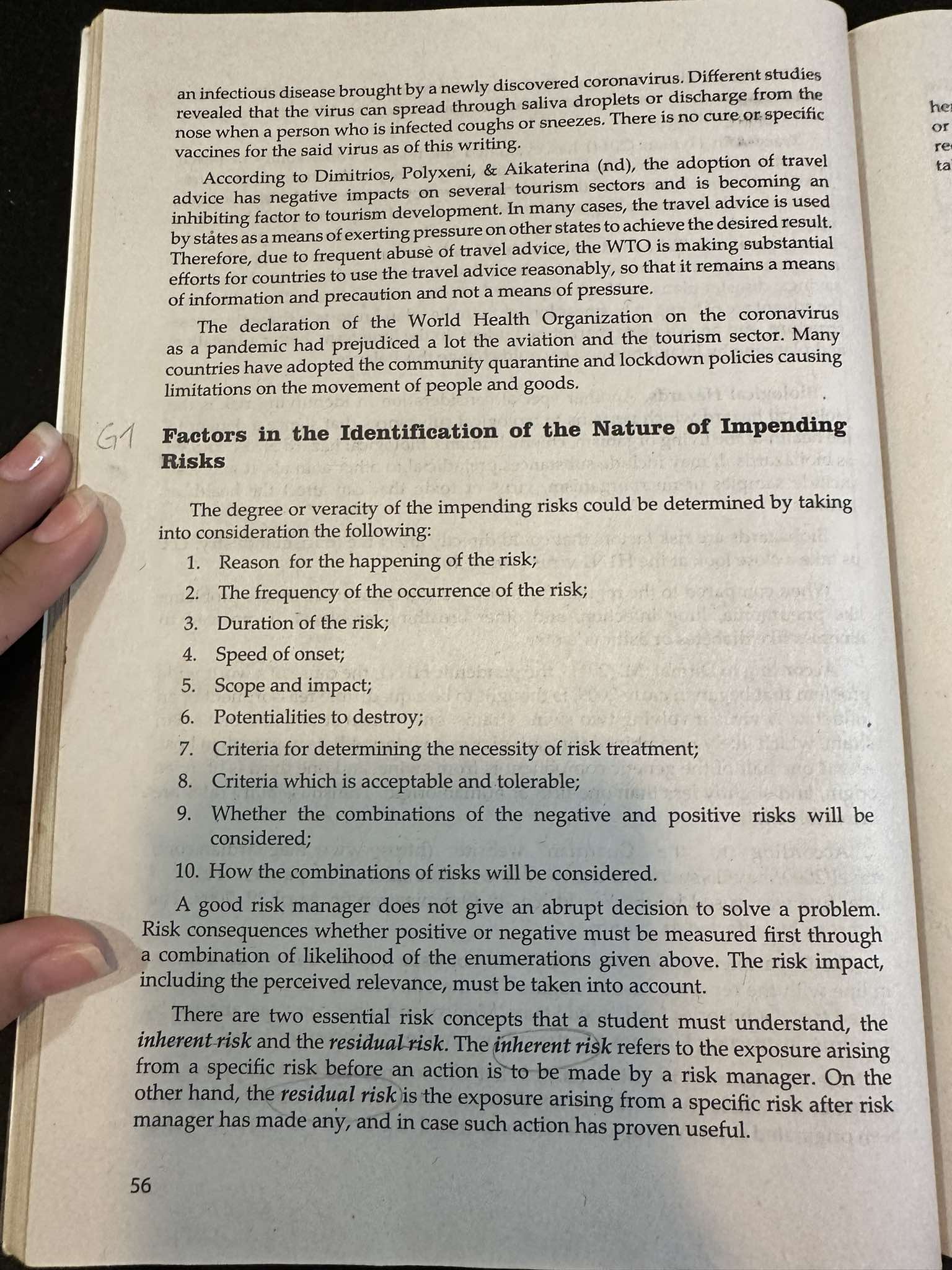
Factors in the Identification of the Nature of Impending Risks
-
Reason for the happening of the risk
- Understanding the root cause is essential in risk management. This helps in developing targeted strategies to mitigate the risk. For instance, if the risk is due to a natural disaster, proactive measures can include preparedness drills and building infrastructure that withstands such events.
-
Frequency of the occurrence of the risk
- Knowing how often a risk occurs allows organizations to prioritize their resources effectively. If a risk is frequent but manageable, it may warrant different strategies compared to a rare but catastrophic risk.
-
Duration of the risk
- Risks that are prolonged or persistent can have more significant impacts compared to short-term risks. For example, long-lasting economic downturns may require ongoing adjustments in operational strategies.
-
Speed of onset
- The rapidity with which a risk can materialize affects response strategies. For instance, a sudden outbreak (like a pandemic) demands immediate action plans, whereas gradual risks can be planned for over time.
-
Scope and impact
- Understanding how widespread the risk is and the severity of its effects is crucial. A local risk might call for a localized response, while national or global risks require collaborative efforts and potentially more substantial resources.
-
Potentialities to destroy
- Evaluating the potential for damage informs risk prioritization. High-impact risks necessitate more robust mitigation strategies.
-
Criteria for determining the necessity of risk treatment
- This involves evaluating whether the potential impacts justify the costs of implementing risk management strategies. Organizations must weigh the benefits against the risks when deciding on interventions.
-
Criteria which is acceptable and tolerable
- Establishing thresholds for risk tolerance assists organizations in decision-making. Understanding what levels of risk are acceptable can guide policies and practices effectively.
-
Whether the combinations of the negative and positive risks will be considered
- It's important to consider the interplay of risks. Some risks may have mitigative effects on others, creating a more complex risk landscape.
-
How the combinations of risks will be considered
- Strategic planning should account for how different risks might compound or interact. This holistic approach can lead to more resilient risk management frameworks.
Concepts of Inherent and Residual Risk
-
Inherent Risk
- This type of risk indicates the exposure associated with an activity in the absence of any controls. Understanding inherent risk helps organizations identify vulnerabilities and areas that require attention.
-
Residual Risk
- After risk management strategies have been implemented, residual risk is what's left. It's essential for organizations to assess this to ensure that they are not exposed to unacceptable levels of risk post-intervention.
These notes highlight the framework for identifying risks and developing strategies to address them in a systematic manner, crucial for effective risk management in various fields, including tourism and business operations during crises like the COVID-19 pandemic.
Reference:
Notes on Insurance Principles
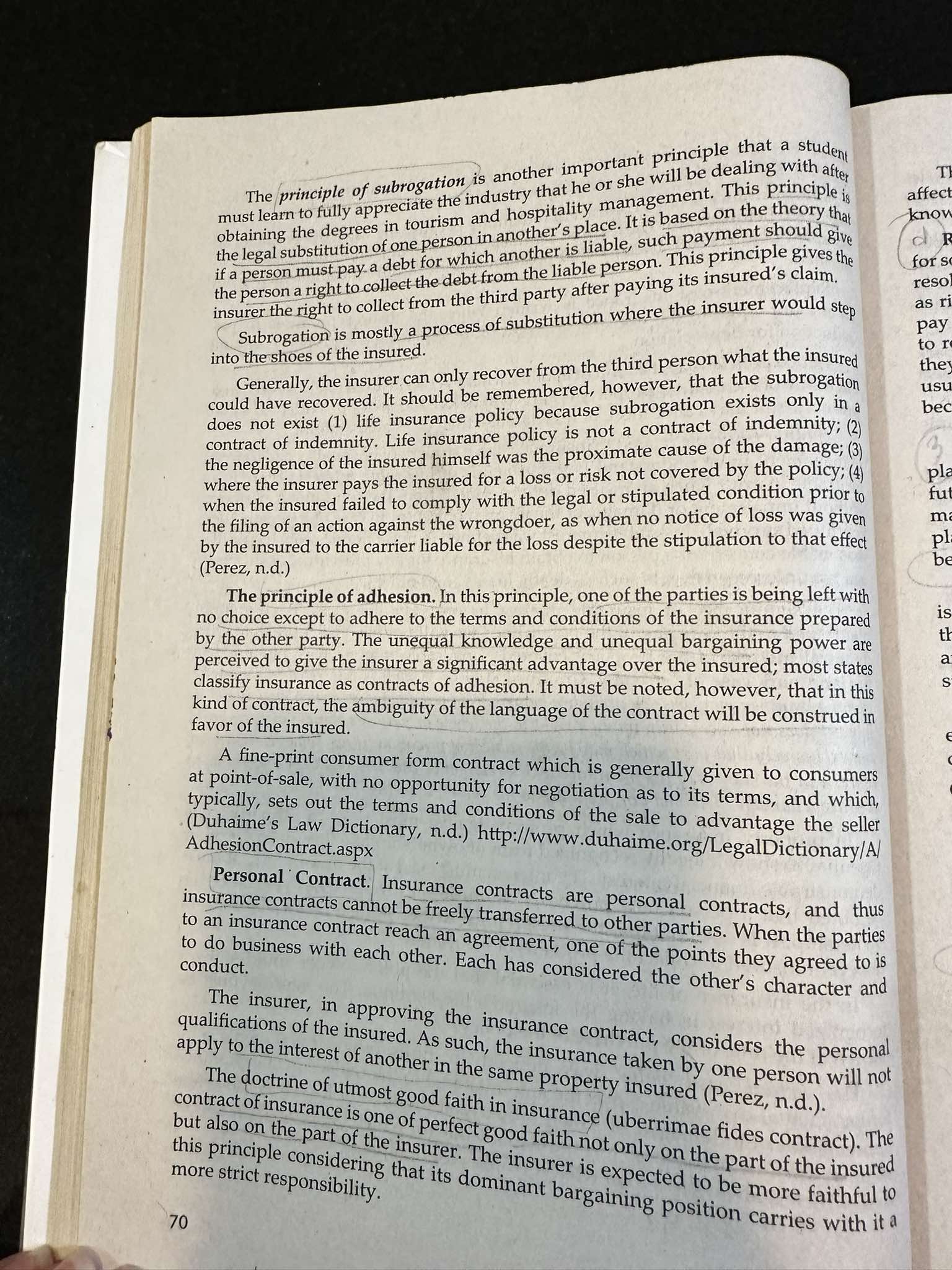
Principle of Subrogation
- Definition: This principle allows an insurer to step into the shoes of the insured to collect a debt owed by a third party after fulfilling a claim.
- Implication: Subrogation helps the insurer recover costs from the responsible party, promoting accountability among third parties.
- Exceptions:
- It does not apply to life insurance policies, as these are not contracts of indemnity.
- Life insurance is based on the loss of life rather than the insured's negligence.
Principle of Adhesion
- Definition: Refers to contracts where one party has significantly more power over the terms than the other, typically seen in insurance contracts.
- Impact: This imbalance gives the insurer an advantage, requiring courts to interpret ambiguous language in favor of the insured.
- Context: Often involves "fine print" contracts that consumers must accept without negotiation.
Personal Contract
- Nature of Insurance Contracts: Unlike other contracts, insurance contracts are personal and cannot be freely transferred.
- Importance: Each party in an insurance contract has a vested interest in the character and conduct of the other, which affects trust and agreement terms.
Doctrine of Utmost Good Faith
- Explanation: This doctrine obligates both parties to act honestly and fairly, not only the insured but also the insurer.
- Relevance: The insurer's position gives them a dominant bargaining power, which heightens the expectation of good faith in transactions.
- Consequence: Failure to uphold this doctrine by either party can compromise the contract and claims.
Summary
These principles highlight the intricate relationship between insurers and insured parties, emphasizing the importance of fairness, clarity, and accountability in insurance agreements. Understanding these concepts is vital for anyone entering into such contracts, particularly in the fields of tourism and hospitality management.
Reference:
Notes on Adventure Tourism Safety and Research
Incident Report
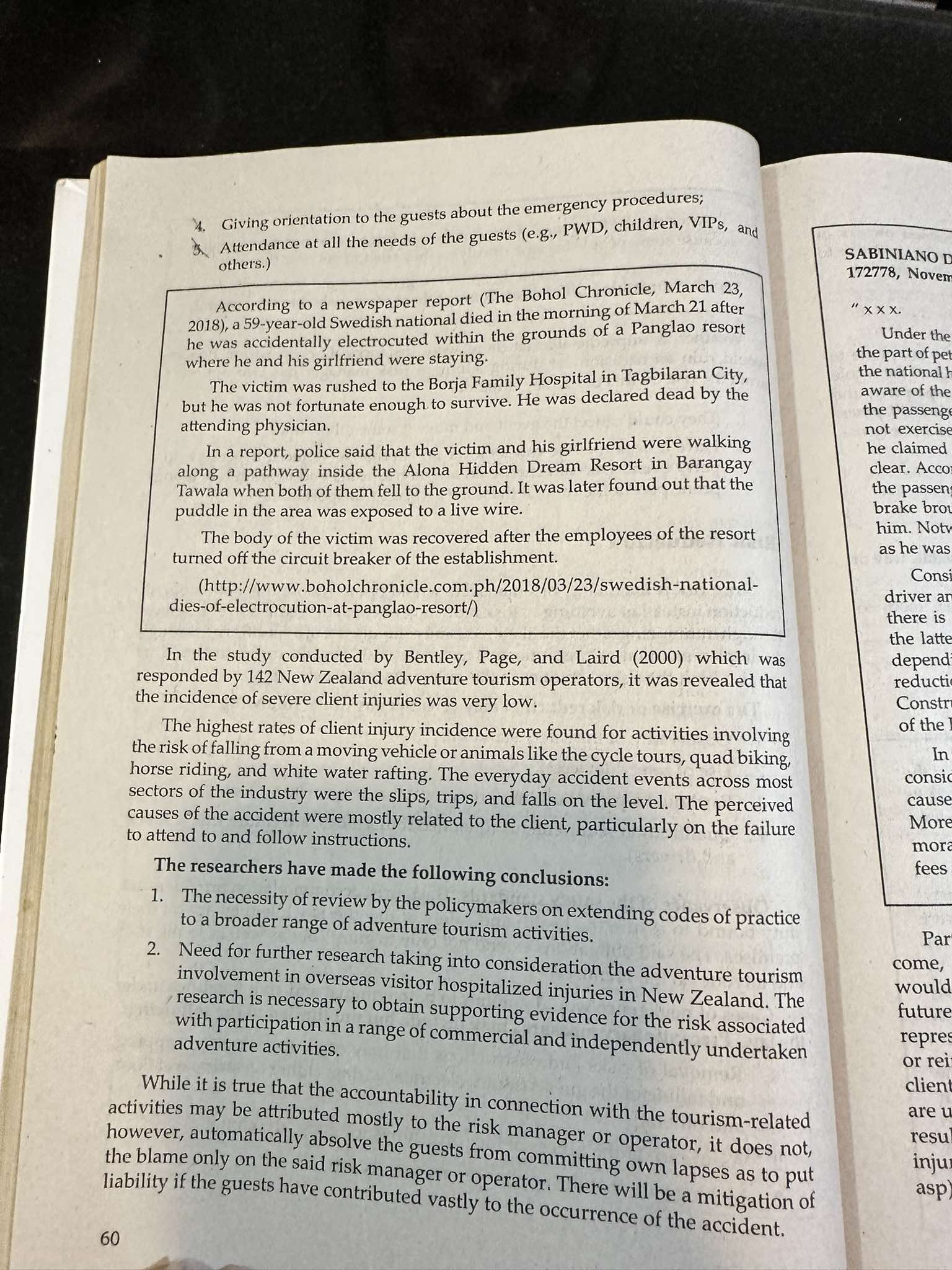
- Accident Summary: A 59-year-old Swedish national was electrocuted at a resort in Panglao on March 21, 2018, after stepping on a live wire while walking with his girlfriend.
- Thoughts: This tragic incident highlights the importance of safety protocols in tourism facilities. Resorts must ensure that all electrical sources are properly maintained and accessible areas are safe for guests.
- Additional Information: The victim was pronounced dead at a hospital after efforts to revive him failed. This indicates a severe lack of safety measures that could have prevented the accident.
Police Report Findings
- Circumstances of the Accident: The couple fell after coming into contact with a live wire while walking on a pathway.
- Thoughts: This raises questions about the maintenance of public areas in tourist resorts and the necessity for regular safety inspections.
- Additional Information: The investigation revealed that a circuit breaker had been turned off, which might indicate negligence in maintaining basic safety standards.
Research Insights
- Study Overview: Conducted by Bentley, Page, and Laird (2000) involving 142 New Zealand adventure tourism operators.
- Incident Rates: High injury rates were linked to activities involving risks from moving vehicles, equestrian activities, and water sports.
- Thoughts: It’s crucial for adventure tourism operators to develop comprehensive safety protocols tailored to high-risk activities.
- Additional Information: Activities like mountain biking and white-water rafting can result in serious accidents, emphasizing the need for rigorous training for both staff and clients.
- Incident Rates: High injury rates were linked to activities involving risks from moving vehicles, equestrian activities, and water sports.
Conclusion Recommendations
-
Policy Review: There is a necessity for policymakers to extend codes of practice across various adventure tourism activities.
- Thoughts: This could lead to improved safety legislation, which is crucial for protecting both tourists and operators.
- Additional Information: A thorough policy can minimize risks and standardize emergency procedures, making the sector safer overall.
-
Further Research: More studies are needed to understand tourism-related injuries better, particularly concerning overseas visitors.
- Thoughts: Gathering more data can help tailor safety protocols specifically for international clientele who may be unfamiliar with local risks.
- Additional Information: Research can focus on specific activities that lead to injuries, helping to implement targeted safety measures.
Responsibility Discussion
- Accountability: While the responsibility may fall primarily on the tourism operator, guests also share part of the accountability for their safety.
- Thoughts: Educating guests about potential risks and ensuring they are aware of their surroundings can significantly enhance safety.
- Additional Information: Operators should provide clear guidelines and emergency instructions to mitigate risks and encourage proactive guest behavior.
Reference: