Understanding Adolescent Relationships: Key Insights
Notes on Grandparent Family Structure
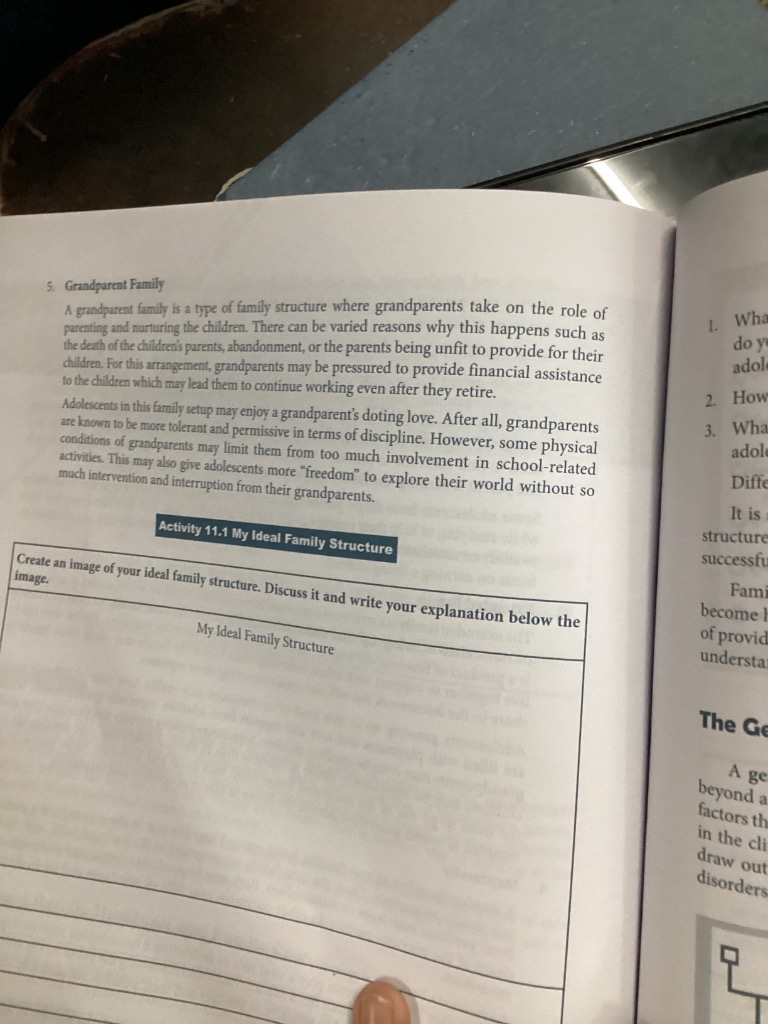
Definition of Grandparent Family
- A grandparent family is a family structure where grandparents assume the roles of parenting and nurturing their grandchildren.
- Thoughts: This shift can occur due to various circumstances, including the death of the children's parents, abandonment, or the parents being unfit to provide adequate care.
- Additional Information: The involvement of grandparents can highlight the importance of familial support networks during crises.
Reasons for Grandparent Care
- Reasons for grandparents taking on this role include:
- Death of children's parents.
- Parental unfitness due to various issues.
- Economic pressures requiring financial assistance from grandparents.
- Thoughts: Many grandparents may feel obligated to step in to ensure the well-being of their grandchildren.
- Additional Information: This arrangement can lead to complex family dynamics, where roles and responsibilities are shifted.
Characteristics of Adolescents in Grandparent Families
- Grandparents may be more tolerant and permissive in terms of discipline compared to parents.
- Thoughts: This tolerance can balance traditional discipline with a nurturing environment.
- Additional Information: Adolescents might experience affection in a less structured setting, promoting emotional bonds.
Involvement in Activities
- Physical conditions or limitations may restrict grandparents from engaging in school-related activities with grandchildren.
- Thoughts: While this could be seen as a drawback, it can also provide adolescents with the opportunity to create independence and explore their world.
- Additional Information: This balance between freedom and guidance is crucial for healthy adolescent development.
Activity: My Ideal Family Structure
- The document prompts individuals to create an image of their ideal family structure and discuss it.
- Thoughts: This exercise encourages reflection on personal values, desires for family dynamics, and the importance of relationships.
- Additional Information: Understanding one's ideal family can help in recognizing the significance of different family roles and enhancing personal relationships.
Extended readings:
open.clemson.edu
[PDF] Characteristics and Needs of Grandparents Raising Grandchildren
www.montana.edu
[PDF] Grandparents Raising Grandchildren: Navigating Adolescence
news.byu.edu
Children are kinder when Grandma and Grandpa are involved in ...
Family Structures and Genograms
Ideal Family Structure
- Common Images: Reflects personal values and societal views on family.
- Thoughts: Discussing and sharing these images can reveal significant insights about relationships and support systems that adolescents value.
- Additional Info: The concept of the ideal family structure varies greatly by culture and individual experience, pointing to the diversity of perspectives on family roles and responsibilities.
Influence as an Adolescent
- Understanding Influence: The ideal family structure can shape identity during adolescence.
- Thoughts: Adolescents may emulate qualities from their perceived ideal family in their own relationships, impacting their self-esteem and social interactions.
- Additional Info: This phase is critical for establishing independence and values, often reflecting back to family dynamics.
Insight from Activities
- Learning Outcomes: Engaging in activities to explore family structures can lead to self-discovery.
- Thoughts: Such activities might encourage adolescents to appreciate their backgrounds and the importance of their support systems.
- Additional Info: Understanding one’s family context aids in navigating challenges during adolescent development.
Genograms
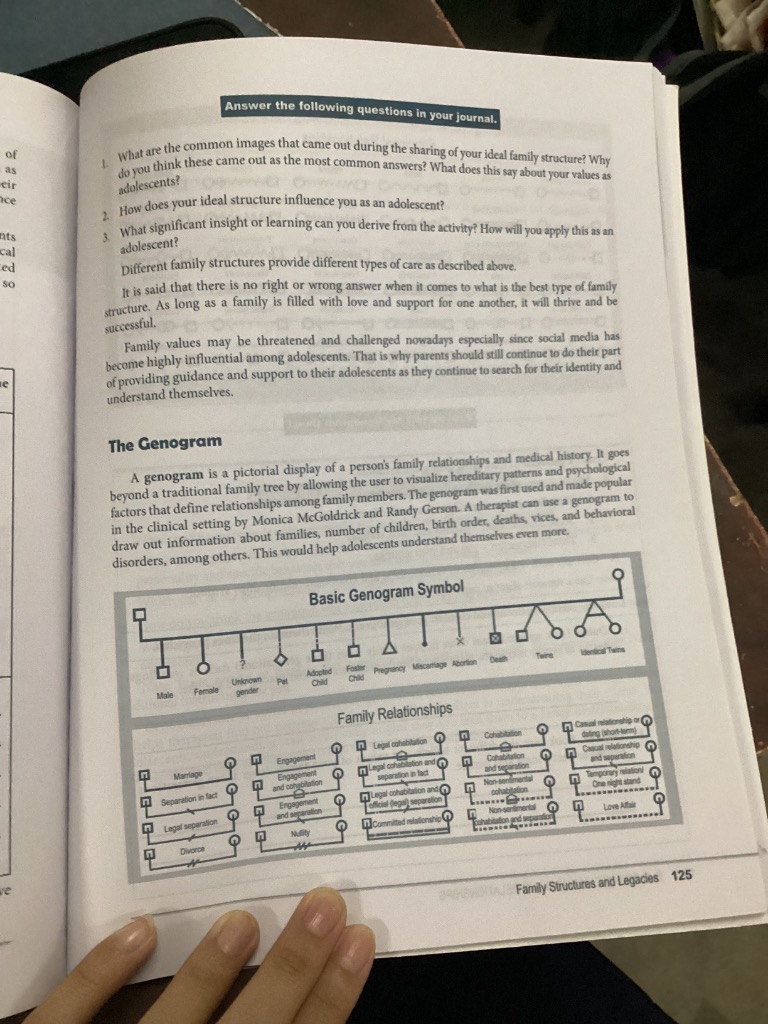
- Definition: A genogram visually represents family relationships and medical history.
- Purpose: It provides insight into family dynamics and psychological effects related to family structures.
- Thoughts: Utilizing genograms in therapy or education can enhance awareness among adolescents about their familial patterns and triggers.
- Additional Info: This tool helps identify trends that may affect behavior in future relationships and personal health.
Genogram Symbols
| Symbol Type | Symbol |
|---|---|
| Male | ♂ |
| Female | ♀ |
| Unknown Gender | ? |
| Adopted Child | [Adoption] |
| Pet | [Pet] |
| Miscarriage | [Miscarriage] |
| Abortion | [Abortion] |
| Death | [Death] |
| Twins | [Twins] |
| Identical Twins | [Ident Twins] |
Family Relationships
| Relationship Type | Symbol |
|---|---|
| Marriage | [Marriage Symbol] |
| Engagement | [Engagement Symbol] |
| Separation in fact | [Separation Symbol] |
| Legal separation | [Legal Separation] |
| Divorce | [Divorce Symbol] |
| Cohabitation | [Cohabitation Symbol] |
| Casual relationship | [Casual Symbol] |
| Committed relationship | [Committed Symbol] |
| Null | [Null Symbol] |
These symbols and definitions help in constructing a clear and evidential view of family dynamics and relationships within the genogram framework.
Extended readings:
journals.sagepub.com
Exploring the Therapeutic Effectiveness of Genograms in Family ...
www.verywellmind.com
What Is a Genogram? - Verywell Mind
genopro.com
What Is A Genogram In Family Therapy - GenoPro
Notes on Emotional Relationships and Genogram Chart
Understanding Emotional Relationships
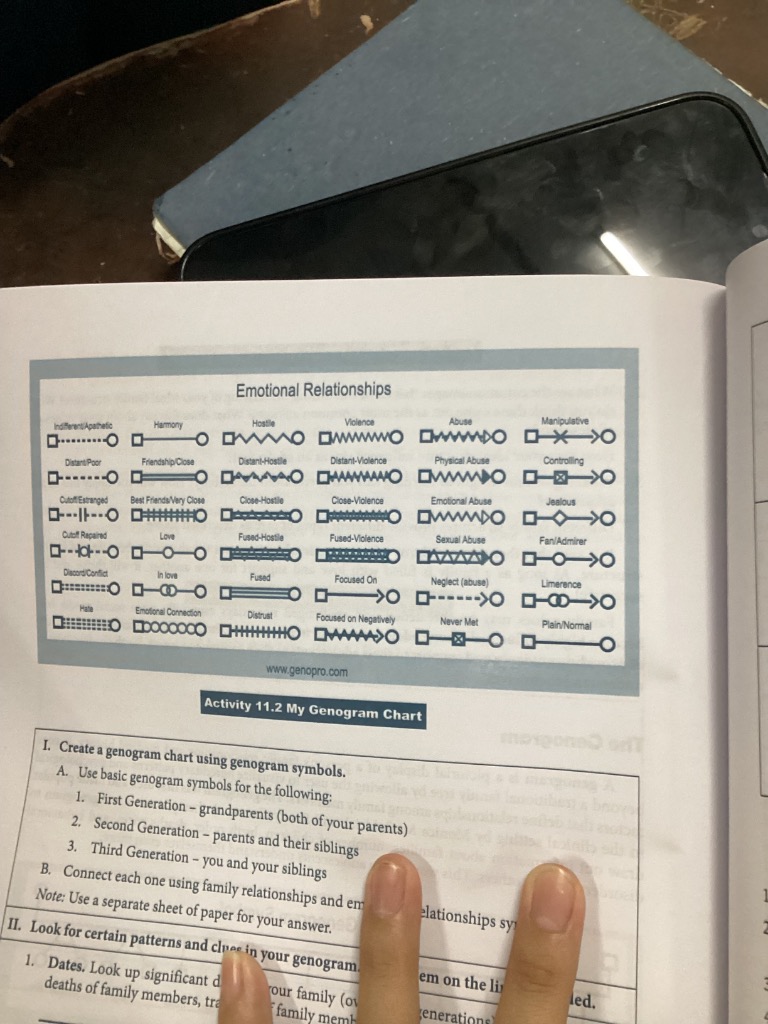
- Emotional Relationships: The diagram categorizes emotional connections between individuals, providing symbols that illustrate the nature of these relationships. This can help in understanding family dynamics and interpersonal connections.
Table of Emotional Relationship Symbols
| Symbol | Meaning |
|---|---|
| Indifferent/Apathetic | Lack of emotional connection |
| Harmony | Positive emotional bond |
| Distant/Poor | Weak relationship |
| Friendship/Close | Strong friendship |
| Very Close | Deep emotional intimacy |
| Distant-Hostile | Tension in the relationship |
| Close-Hostile | Intimacy mixed with conflict |
| Violence | Presence of aggression |
| Distant-Violence | Aggression from a distance |
| Physical Abuse | Harmful physical interactions |
| Emotional Abuse | Psychological harm |
| Neglect (abuse) | Lack of support and care |
| Manipulative | Control in the relationship |
| Jealous | Envy affecting relationships |
| Limerence | Strong romantic infatuation |
| Focused on Negatively | Relationships characterized by negativity |
Importance of Genograms
- Genograms: Used to visually represent family relationships and dynamics over generations. This is crucial for understanding the influences of family history on current emotional relationships.
Steps to Create a Genogram
- First Generation: Document grandparents (both parents).
- Second Generation: Include parents and their siblings.
- Third Generation: Represent you and your siblings.
Practical Application
- Genograms can provide insights into patterns within family systems, revealing cycles of behavior or emotional difficulties that may persist across generations. This can be a valuable tool in therapeutic contexts or personal reflection, guiding individuals toward healthier relationships by understanding their family background.
Discussion Prompts
- Reflect on how emotional relationships in your family influence your current relationships.
- Consider how understanding your family dynamics through a genogram could help in addressing any emotional challenges.
Conclusion
Using the knowledge of emotional relationships and genograms can empower individuals to recognize patterns and make informed choices about their emotional connections, leading to healthier interactions both within the family and beyond.
Extended readings:
genopro.com
Emotional Relationships in Genograms - GenoPro
www.olivemecounseling.com
How to Make a Genogram - OliveMe Counseling
venngage.com
Genogram Definition, History and Types - Venngage