Abdominopelvic Regions and Quadrants Explained
An Introduction to the Human Body
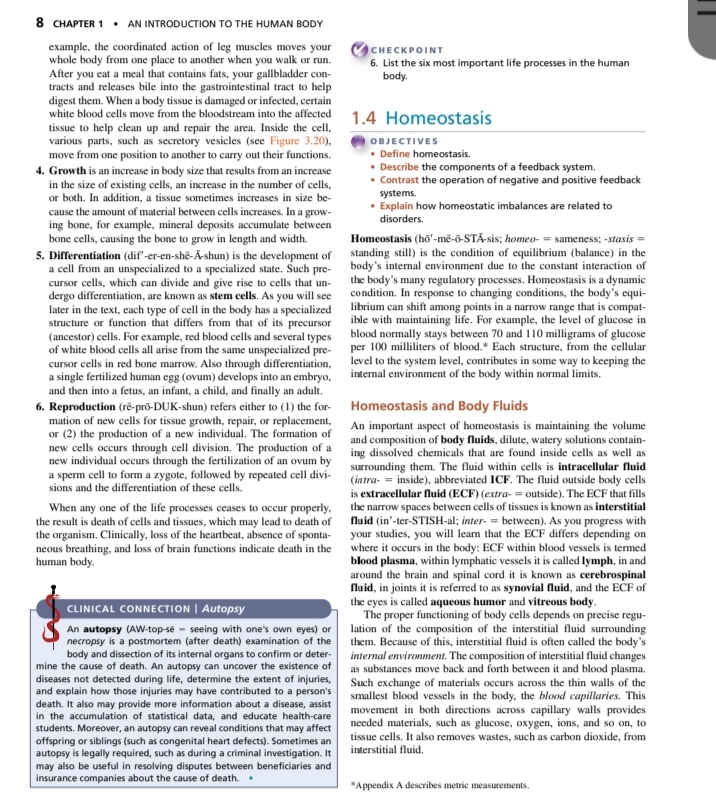
Homeostasis
Definition of Homeostasis
- Homeostasis is the condition of equilibrium (balance) in the body's internal environment due to the interaction of various regulatory processes.
- Thoughts: Understanding homeostasis is crucial for grasping how the body maintains stable conditions despite changes in the external environment.
Components of a Feedback System
- Feedback systems consist of:
- Receptor: Detects changes in the environment.
- Control Center: Processes the information and coordinates a response.
- Effector: Executes the response to restore balance.
- Additional Information: This loop allows the body to adjust to fluctuations, ensuring optimal functioning of biological processes.
Positive vs. Negative Feedback
- Negative Feedback: A mechanism that counteracts a change, returning the body to its set point (e.g., regulation of body temperature).
- Positive Feedback: Enhances a change, leading to an even greater response (e.g., childbirth contractions).
- Thoughts: Negative feedback is more common for maintaining homeostasis, while positive feedback is generally involved in specific events.
Importance of Homeostasis in Disorders
- Disruption of homeostasis can lead to health issues or disorders, highlighting the need for balance in physiological processes.
- Additional Information: Conditions such as diabetes illustrate the importance of glucose homeostasis. In diabetes, the body can't regulate blood glucose levels effectively.
Growth and Differentiation
- Growth results from cell increase in size or number.
- Thoughts: Knowing the mechanisms behind growth is vital for understanding developmental biology and tissue repair.
- Differentiation is the process through which cells specialize from unspecialized precursors.
- Additional Information: Differentiation allows for diverse functions of cells, crucial for complex organisms.
Reproduction
- Reproduction includes the formation of new cells for tissue repair and the production of new individuals.
- Thoughts: Understanding cellular reproduction is essential for fields like genetics and medicine.
Clinical Connection: Autopsy
- An autopsy is a procedure to determine the cause of death and evaluate disease.
- Thoughts: Autopsies provide crucial insights into health issues and can affect medical knowledge and policies.
Homeostasis and Body Fluids
Body Fluid Composition
- Body fluids are classified as:
- Intracellular Fluid (ICF): Fluid within cells.
- Extracellular Fluid (ECF): Fluid outside cells, consisting of:
- Interstitial Fluid: Surrounds cells and tissues.
- Blood Plasma: Component of blood.
- Lymph: Fluid in the lymphatic system.
- Thoughts: The balance of these fluids is necessary for proper cellular function and overall health.
Additional Table: Body Fluid Types
| Type | Location | Function |
|---|---|---|
| Intracellular Fluid | Inside cells | Maintains cell structure and function |
| Extracellular Fluid | Outside cells | Supports nutrient transport |
| Interstitial Fluid | Surrounding tissues | Bathes and nourishes cells |
| Blood Plasma | Within blood vessels | Carries nutrients, gases, and waste |
| Lymph | Lymphatic system | Transports immune cells and waste |
- Additional Information: Maintaining the balance of these fluids is vital for homeostasis, as imbalances can lead to dehydration or edema.
Reference:
Notes on Human Organ Systems
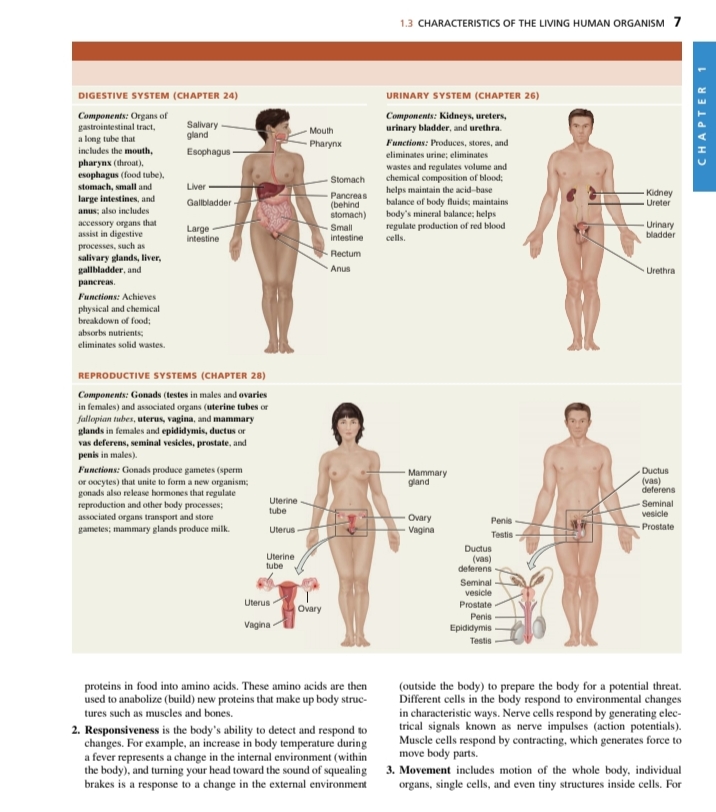
Digestive System (Chapter 24)
-
Components:
- Organs of the gastrointestinal tract (mouth, pharynx, esophagus, stomach, small intestine, large intestine, anus)
- Accessory organs (salivary glands, liver, gallbladder, pancreas)
Thoughts: The digestive system plays a crucial role in converting food into nutrients for energy, growth, and cell repair. Understanding the components helps illustrate how food is processed.
-
Functions:
- Achieves physical and chemical breakdown of food.
- Absorbs nutrients.
- Eliminates solid wastes.
Additional Info: The digestive system's efficiency affects overall health. Issues like poor digestion can lead to nutrient deficiencies.
Urinary System (Chapter 26)
-
Components:
- Kidneys, ureters, urinary bladder, urethra
Thoughts: The kidneys are vital organs that filter blood and remove waste. Understanding their placement signifies their importance in homeostasis.
-
Functions:
- Produces, stores, and eliminates urine.
- Eliminates wastes and regulates body fluid volume.
- Maintains acid-base balance and mineral balance.
- Helps regulate red blood cell production.
Additional Info: The balance of fluids and electrolytes managed by this system is essential for bodily function and can impact blood pressure and heart health.
Reproductive Systems (Chapter 28)
-
Components:
- In males: Gonads (testes) and associated organs (ductus deferens, seminal vesicles, prostate, penis).
- In females: Gonads (ovaries) and associated organs (uterine tubes, uterus, vagina, mammary glands).
Thoughts: This system is not only essential for reproduction but also for hormonal balance, influencing many physiological processes.
-
Functions:
- Males: Produce sperm and hormones.
- Females: Produce eggs, hormones, and can also produce milk for nursing.
Additional Info: Understanding the reproductive systems enhances awareness of issues like infertility, hormonal imbalances, and reproductive health concerns.
| System | Components | Functions |
|---|---|---|
| Digestive System | Mouth, pharynx, esophagus, stomach, small intestine, large intestine, anus, salivary glands, liver, gallbladder, pancreas | Breaks down food, absorbs nutrients, eliminates wastes |
| Urinary System | Kidneys, ureters, urinary bladder, urethra | Produces and eliminates urine, regulates body fluids, maintains acid-base balance, helps production of red blood cells |
| Reproductive System | Males: testes, ductus deferens, seminal vesicles, prostate, penis; Females: ovaries, uterine tubes, uterus, vagina, mammary glands | Produces gametes, hormones, and milk; regulates reproduction and other body processes |
Reference:
Systems of the Human Body
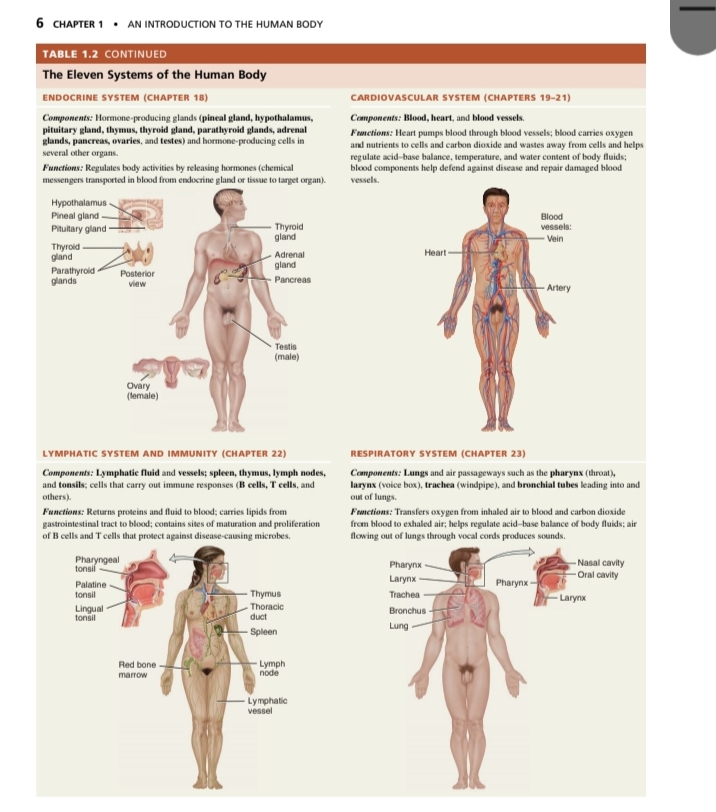
Overview
The image presents an overview of the eleven systems of the human body, detailing their components and functions. Understanding these systems is crucial for the study of human anatomy and physiology.
Table of Human Body Systems
| System | Components | Functions |
|---|---|---|
| Endocrine System (Chapter 18) | Hormone-producing glands: pineal gland, hypothalamus, pituitary gland, thymus, thyroid gland, parathyroid glands, adrenal glands, pancreas, ovaries, testes. | Regulates body activities by releasing hormones (chemical messages) transported in blood to target organs. They help in homeostasis and various bodily functions. |
| Cardiovascular System (Chapters 19-21) | Blood, heart, and blood vessels. | Heart pumps blood through blood vessels; blood carries oxygen and nutrients to cells and carbon dioxide and wastes away from cells, regulating body fluids. |
| Lymphatic System and Immunity (Chapter 22) | Lymphatic fluid and vessels; spleen, thymus, lymph nodes, and tonsils; cells that carry out immune responses (B cells, T cells, and others). | Returns proteins and fluid to blood; carries lipids from the gastrointestinal tract to blood; aids in maturation and proliferation of immune cells that protect against pathogens. |
| Respiratory System (Chapter 23) | Lungs and air passages such as the pharynx, larynx, trachea, and bronchial tubes. | Transfers oxygen from inhaled air to blood and carbon dioxide from blood to exhaled air; helps regulate body fluids; produces sound through vocal cords. |
Detailed Thoughts
-
Endocrine System: This system utilizes hormones to communicate between different parts of the body. For example, the hypothalamus plays a key role in regulating body temperature and thirst, while the pituitary gland is often called the "master gland" for its wide range of hormone production that influences other glands.
-
Cardiovascular System: The heart is an essential organ that maintains the flow of blood throughout the body, which is crucial for delivering nutrients and removing waste products. An understanding of how blood vessels work (arteries, veins, and capillaries) is fundamental to grasping how the body maintains homeostasis.
-
Lymphatic System and Immunity: This system is vital for fluid balance and immune function. It helps in the maturation of lymphocytes (B and T cells), which are critical for adaptive immunity. Understanding this system is essential for studying diseases related to immune dysfunctions.
-
Respiratory System: This system is crucial for gas exchange and maintaining acid-base balance in the body. The process of ventilation (breathing) and the role of the diaphragm are key concepts to understand in respiratory physiology and medicine.
These notes provide a foundation for understanding the interconnectedness of bodily systems and their roles in maintaining health and homeostasis.
Reference:
Characteristics of the Living Human Organism
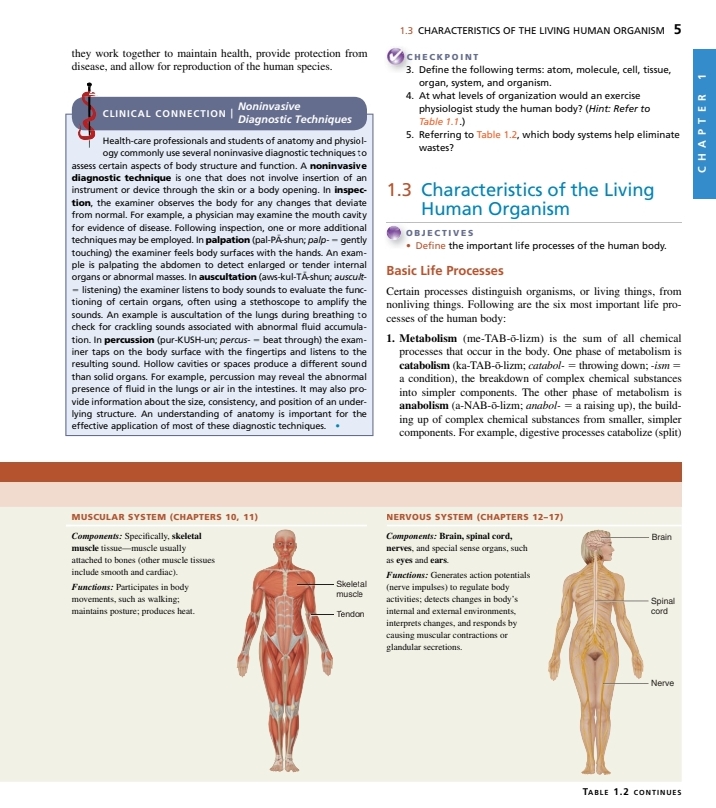
Noninvasive Diagnostic Techniques
- Definition: Noninvasive diagnostic techniques assess body structure and function without inserting instruments into the body.
- Importance: These methods provide crucial information without risking harm, making them safer for patients.
- Examples:
- Inspection: Visual examination of the body for signs of disease.
- Palpation: Gentle touch to feel organs and detect abnormalities.
- Auscultation: Listening to sounds within the body, using instruments like a stethoscope.
- Percussion: Tapping the body to assess the underlying structures based on sound.
Basic Life Processes
- Metabolism: The sum of all chemical processes in the body.
- Catabolism: The breakdown of complex substances into simpler ones, often releasing energy. For example, digestion breaks down food.
- Anabolism: The building up of complex substances from simpler components, essential for growth and repair.
Life Processes of the Human Body
- Metabolism
- The foundation of all life processes, necessary for energy production and material synthesis.
Muscular System
| Component | Description |
|---|---|
| Skeletal muscle | Muscle tissue attached to bones, aiding movement. |
| Function | Participates in body movements, maintains posture, and produces heat. |
Nervous System
| Component | Description |
|---|---|
| Brain, spinal cord, nerves | Controls body activities and interprets changes. |
| Function | Receives, processes, and responds to information; initiates muscle contractions and glandular secretions. |
Summary
The human organism exhibits intricate characteristics through structured systems like the muscular and nervous systems, supported by noninvasive diagnostic techniques that enhance healthcare assessments. Understanding metabolism and its processes is crucial for maintaining life and health.
Reference:
Notes on Introduction to the Human Body
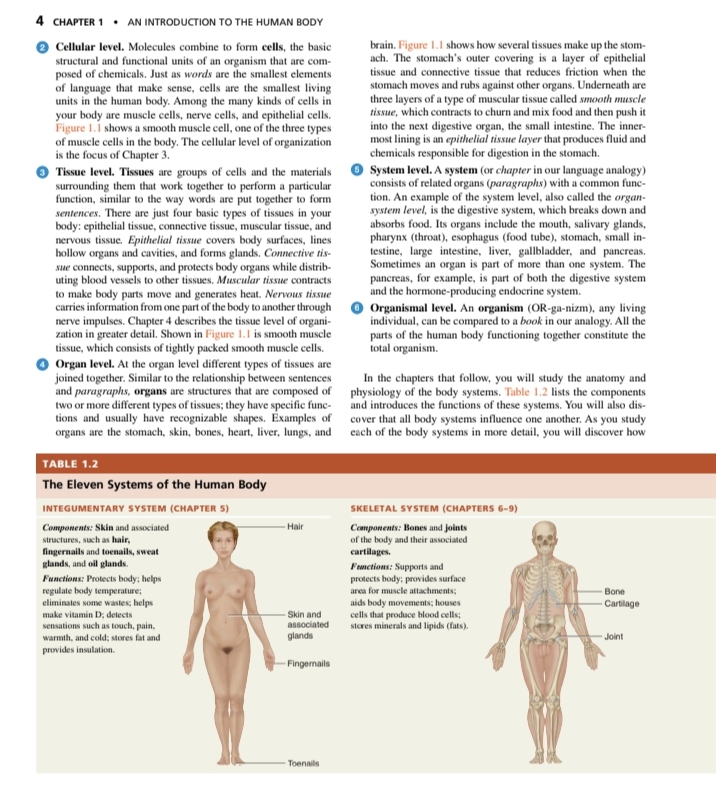
Cellular Level
- Definition: Molecules combine to form cells, which are the basic structural and functional units of an organism.
- Thoughts: Understanding cells is crucial as they are the building blocks of life. Each type of cell has specialized functions, contributing to the organism's overall health.
- Additional Info: The human body consists of various cell types, including muscle cells, nerve cells, and epithelial cells.
Tissue Level
- Definition: Tissues are groups of cells and surrounding materials working together for a specific function.
- Thoughts: Tissues perform essential roles in the body, and studying them helps us understand how different organ systems operate.
- Types of Tissues:
- Epithelial: Covers body surfaces.
- Connective: Supports and connects different tissues.
- Muscular: Responsible for movement.
- Nervous: Transmits signals between different body parts.
Organ Level
- Definition: Organs are made up of different tissue types serving specific functions.
- Thoughts: Each organ has a unique structure and is designed to perform distinct tasks essential for the organism's survival.
- Examples: Stomach, heart, liver, lungs, etc.
System Level
- Definition: Systems consist of related organs that work together to perform complex functions.
- Examples: The digestive system includes the stomach, intestines, and pancreas.
- Thoughts: Understanding the interdependencies of body systems highlights the complexity of human physiology.
Organismal Level
- Definition: An individual organism can be compared to a book, where various parts function collectively.
- Thoughts: This level emphasizes the integration of all body systems, essential for maintaining health and homeostasis.
Table 1.2: The Eleven Systems of the Human Body
| System | Components/Functions |
|---|---|
| Integumentary System | Components: Skin, hair, fingernails, and glands. Functions: Protects body, regulates temperature, and synthesizes vitamin D. |
| Skeletal System | Components: Bones and joints. Functions: Supports body, protects organs, and produces blood cells. |
Reference:
Notes on Levels of Structural Organization in the Human Body
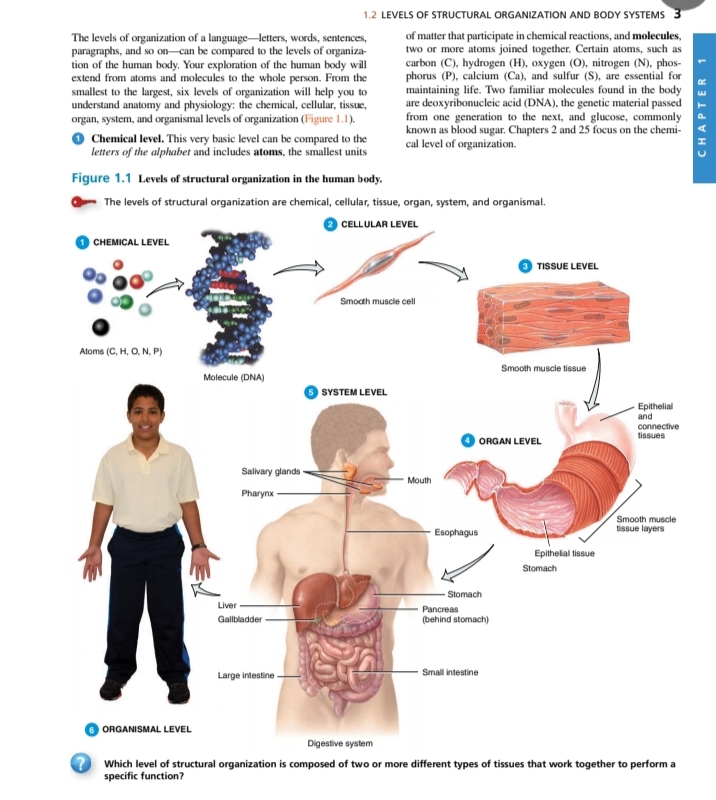
Overview
The human body is organized at six different levels: chemical, cellular, tissue, organ, system, and organismal. Each level builds upon the previous one, similar to how letters combine to form words and sentences.
Levels of Organization
-
Chemical Level
- This is the most basic level and includes atoms and molecules.
- Example: Atoms such as carbon (C), hydrogen (H), nitrogen (N), oxygen (O), phosphorus (P), and sulfur (S) are essential for maintaining life.
- Thoughts: Understanding this level is fundamental as it forms the basis for all biological structures. It highlights the role of biochemistry in health and disease.
-
Cellular Level
- Cells are the basic units of life; different types of cells perform specific functions.
- Example: Smooth muscle cells that help in movement.
- Additional Information: Cells are composed of various organelles that each have distinct functions, contributing to the overall functioning of the cell.
-
Tissue Level
- Tissues consist of groups of similar cells that work together to perform a specific function.
- Example: Smooth muscle tissue composed of smooth muscle cells.
- Thoughts: Understanding tissue types (epithelial, connective, muscle, nerve) is crucial for comprehending how organs are formed and their functions.
-
Organ Level
- Organs are structures made up of different types of tissues that work together to perform specific functions.
- Example: The stomach, which contains smooth muscle and epithelial tissues.
- Additional Information: Each organ has its unique structure that serves its specific function within the body.
-
System Level
- Organ systems consist of groups of organs working together for common purposes.
- Example: The digestive system includes the mouth, esophagus, stomach, and intestines.
- Thoughts: This level emphasizes the interconnectivity between organs and their roles in maintaining homeostasis.
-
Organismal Level
- This is the highest level of organization, representing the entire living individual.
- Example: The complete human body.
- Additional Information: At this level, all systems work in harmony to maintain life and health.
Visual Summary
The image summarizes the levels with corresponding examples, illustrating the hierarchical organization from atoms to the whole organism, emphasizing that each level is dependent on the lower levels for structure and function.
Anatomy and Physiology Defined
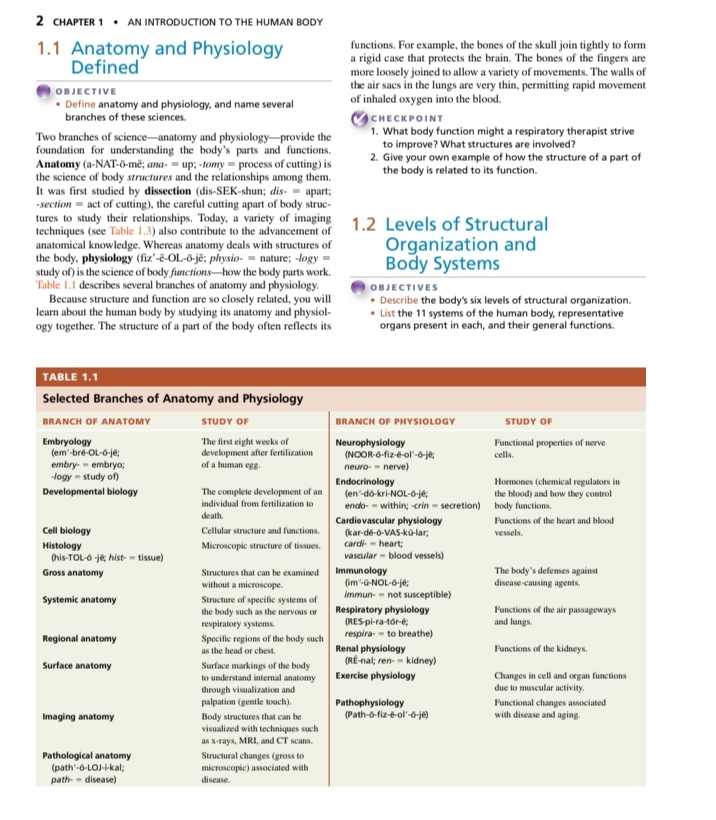
Key Points
- Definition of Anatomy and Physiology:
- Anatomy: The study of the body's structures and the relationships among them. This involves examining physical components like organs and tissues.
- Idea: Anatomy allows healthcare professionals to understand where different components of the body are located and how they interact.
- Additional Information: Dissection was historically vital for learning anatomy, but modern imaging techniques like MRI or CT scans are also crucial.
- Physiology: The study of the functions of those structures—how they work and interact.
- Idea: Understanding physiology is essential for grasping how diseases affect bodily functions.
- Additional Information: Physiology encompasses processes such as metabolism, respiration, and hormonal regulation.
- Anatomy: The study of the body's structures and the relationships among them. This involves examining physical components like organs and tissues.
Table 1.1: Selected Branches of Anatomy and Physiology
| BRANCH OF ANATOMY | STUDY OF | BRANCH OF PHYSIOLOGY | STUDY OF |
|---|---|---|---|
| Embryology | The first eight weeks of development after fertilization | Neurophysiology | Functional properties of nerve cells |
| Developmental biology | The complete development of an individual from fertilization to death | Endocrinology | Hormones (chemical regulators in the body) and their functions |
| Cell biology | Cellular structure and functions. Microscopic structure of tissues | Cardiovascular physiology | Functions of the heart and blood vessels |
| Histology | Histological structures that can be examined under a microscope | Immunology | The body's defenses against disease-causing agents |
| Gross anatomy | Structures that can be examined without a microscope | Respiratory physiology | Functions of the air passages and lungs |
| Systemic anatomy | Structure of specific systems of the body such as the nervous or respiratory system | Renal physiology | Functions of the kidneys |
| Regional anatomy | Specific regions of the body such as the cranial or thoracic | Exercise physiology | Changes in cell and organ functions due to muscular activity |
| Surface anatomy | Surface markings that can be observed through visualization or palpation | Pathophysiology | Functional changes associated with disease and aging |
| Imaging anatomy | Individual anatomy using imaging techniques (e.g., MRI, CT) | ||
| Pathological anatomy | Structural changes associated with disease |
Importance and Interconnection
- Interrelation of Structure and Function: The relationship between anatomy and physiology is integral—understanding one enhances comprehension of the other.
- Thoughts: For instance, the structure of the lungs facilitates gas exchange; any changes in structure may impact function.
- Educational and Practical Relevance: These branches provide foundational knowledge for medical fields, guiding diagnostics, treatment planning, and therapeutic interventions.
- Additional Information: Both fields work together in areas such as pathology, which examines the structural changes in tissues due to diseases and correlates them with physiological dysfunction.
Reference:
An Introduction to the Human Body
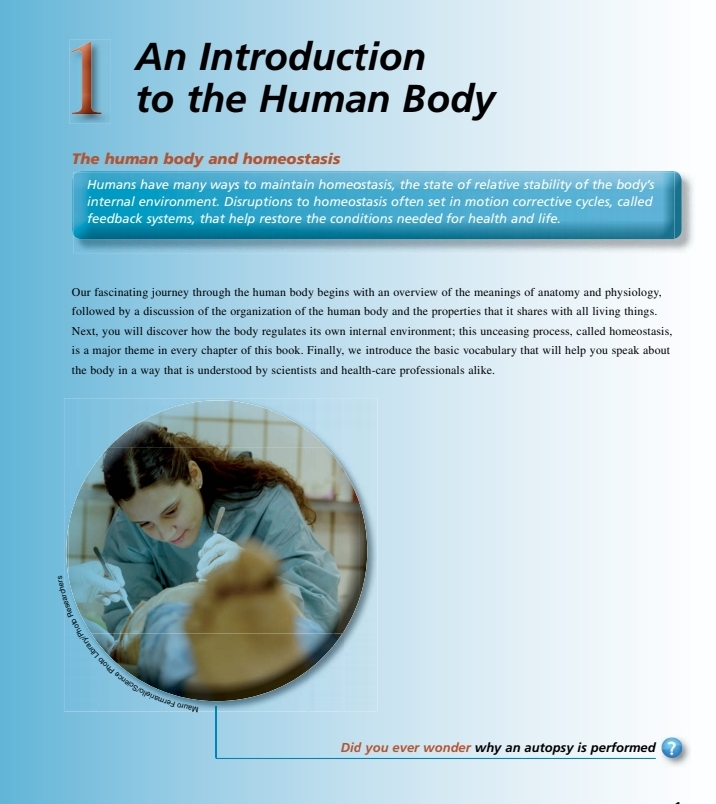
The Human Body and Homeostasis
-
Homeostasis Definition: Homeostasis refers to the stable conditions maintained by the body despite changes in the environment. This is crucial for survival and optimal functioning.
- Thoughts: Understanding homeostasis can help us appreciate why certain conditions, like fever or dehydration, can have significant effects on health.
- Additional Information: Homeostatic processes can include temperature regulation, pH balance, and fluid balance, all crucial for bodily functions.
-
Disruptions to Homeostasis: These can trigger feedback systems that work to restore balance.
- Thoughts: This concept reveals how the body is a dynamic system, constantly adjusting to internal and external changes.
- Additional Information: Examples of feedback systems include the body’s response to temperature changes and blood sugar regulation.
Overview of Anatomy and Physiology
-
Anatomy and Physiology: The study of structure (anatomy) and function (physiology) of the human body.
- Thoughts: A solid grasp of these principles can enhance our understanding of health and illness.
- Additional Information: Anatomy can be studied at various levels including macroscopic, microscopic, and cellular levels.
-
Organization of the Human Body: It is systematically organized, from atoms to organs to systems.
- Thoughts: This hierarchical structure helps in comprehending the complex interrelationships in biological functions.
- Additional Information: The body is composed of cells that form tissues, which then combine to create organs, ultimately forming systems (e.g., the cardiovascular system).
Body's Internal Regulation
- Self-Regulation: The ability of the body to adjust its internal environment.
- Thoughts: This demonstrates the body’s innate intelligence and ability to respond to various stimuli.
- Additional Information: Self-regulation mechanisms can involve hormones, neural pathways, and physical changes.
Vocabulary Introduction
- Basic Vocabulary: Key terms that will be defined and used throughout the discussion of human anatomy and physiology.
- Thoughts: Familiarizing oneself with these terms will enhance comprehension and communication regarding health topics.
- Additional Information: Examples of basic vocabulary may include terms related to body systems, anatomical positions, and common physiological processes.
Autopsy Inquiry
- Did you ever wonder why an autopsy is performed?
- Thoughts: This question opens the door to discussions on understanding causes of death, which can have implications in medicine and law.
- Additional Information: Autopsies can provide insights into disease processes, assist in public health monitoring, and contribute to medical research.
Reference: