SaaS Annual Report 2023-2024: Trends and Insights
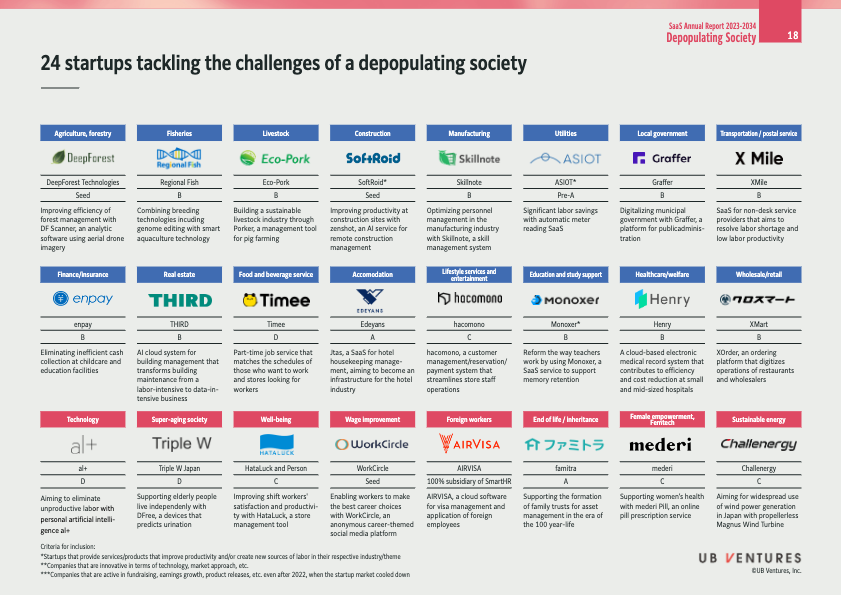
24 Startups Tackling the Challenges of a Depopulating Society
Overview
This note captures insights into startups aimed at addressing societal challenges due to depopulation, as outlined in the SaaS Annual Report 2023-2034. Each startup focuses on distinct sectors contributing to improved efficiency and productivity.
Startup Category Overview
| Sector | Startup Name | Description | Stage |
|---|---|---|---|
| Agriculture, Forestry | DeepForest Technologies | Improving efficiency of forest management with DF Scanner, an analytic software using aerial drone imagery. | Seed |
| Fisheries | Regional Fish | Combining breeding technologies including genome editing with smart aquaculture technology. | B |
| Livestock | Eco-Pork | Building a sustainable livestock industry through Porker, a management tool for pig farming. | B |
| Construction | SoftRoid | Improving productivity at construction sites with Zenshot, an AI service for remote construction management. | Seed |
| Manufacturing | Skillnote | Optimizing personnel management in the manufacturing industry with Skillnote, a skill management system. | B |
| Utilities | ASIOT | Significant labor savings with automatic meter reading SaaS. | Pre-A |
| Local Government | Graffer | Digitalizing municipal government operations with Graffer, a platform for public administration. | B |
| Transportation/Post Services | XMile | SaaS for non-desk service providers that aims to resolve labor shortage and low productivity. | B |
| Finance/Insurance | enpay | Eliminating inefficient cash collection at childcare and education facilities. | B |
| Real Estate | THIRD | AI cloud system for building management that transforms building maintenance from labor-intensive to data-intensive. | B |
| Food and Beverage Service | Timee | Part-time job service matching workers' schedules with stores looking for help. | D |
| Accommodation | Edeyans | SaaS for hotel housekeeping management, aiming to become an infrastructure for the hotel industry. | A |
| Lifestyle Services and Entertainment | hacomono | Customer management/reservation system that streamlines store staff operations. | C |
| Education and Study Support | Monoxer | Reforming teacher workflows through a SaaS service supporting memory retention. | B |
| Healthcare/Welfare | Henry | Cloud-based electronic medical record system for efficiency and cost reduction at small/mid-sized hospitals. | B |
| Wholesale/Retail | XMart | A platform that digitizes the operations of restaurants and wholesalers. | B |
| Technology | al+ | Aiming to eliminate unproductive labor with personal artificial intelligence. | D |
| Super-Aging Society | Triple W | Supporting elderly independence with a device that predicts urination. | D |
| Well-being | HataLuck and Person | Enhancing shift workers' satisfaction and productivity with a store management tool. | C |
| Wage Improvement | WorkCircle | Enabling workers to make the best career choices through an anonymous career-themed social media platform. | Seed |
| Foreign Workers | AIRVISA | Cloud software for visa management for foreign employees; a subsidiary of SmartHR. | 100% |
| End of Life/Inheritances | famitra | Supporting family trust formation for asset management in the 100-year life era. | A |
| Female Empowerment, Femtech | mederi | Supporting women’s health with an online pill prescription service. | C |
| Sustainable Energy | Challenergy | Aiming for widespread use of wind power in Japan with a propellerless Magnus Wind Turbine. | C |
Insights and Key Ideas
- Technology Integration: Many of these startups leverage advanced technology (like AI and cloud computing) to enhance productivity and operational efficiency.
- Focus on Labor Shortages: Multiple companies specifically address labor shortages, reflecting a broader societal issue amidst depopulation trends.
- Diverse Applications: The range of sectors highlighted indicates a comprehensive approach to tackling various aspects of societal challenges related to a decreasing population.
- Sustainability Considerations: Startups like Challenergy point toward a trend in sustainable solutions, emphasizing the need for environmentally friendly innovations.
- Empowerment Initiatives: The presence of Femtech startups underscores the increasing focus on women’s health and empowerment in business strategies.
This structured note provides a clear and comprehensive overview of the startups and their respective roles in addressing depopulation challenges.
Extended readings:
Notes on Tackling Population Decline
Overview
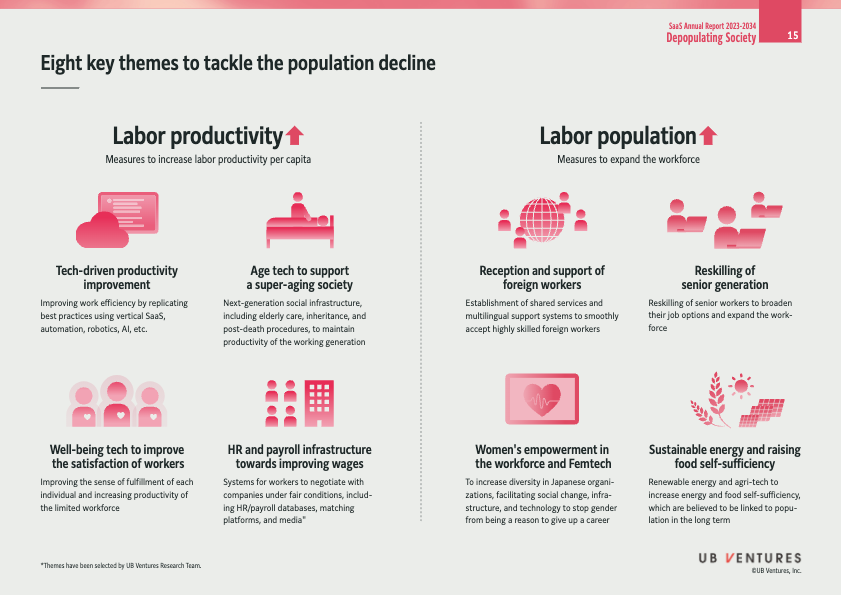
The report from UB Ventures outlines eight key themes aimed at addressing population decline through measures focused on labor productivity and expanding the labor population.
Labor Productivity Measures
-
Tech-driven Productivity Improvement
- Description: Enhancing work efficiency by adopting best practices in vertical Software as a Service (SaaS), automation, robotics, and artificial intelligence (AI).
- Insight: Leveraging technology can streamline operations and reduce manual labor, leading to increased output per worker.
-
Age Tech to Support a Super-aging Society
- Description: Developing next-generation social infrastructure to support elderly care and related services, ensuring productivity remains high among the working generation.
- Insight: Proactive care solutions can help maintain a healthy workforce, essential in societies with aging populations.
-
Well-being Tech to Improve the Satisfaction of Workers
- Description: Innovations aimed at enhancing individual fulfillment and productivity within a limited workforce.
- Insight: Addressing mental health and job satisfaction can lead to reduced turnover and increased overall productivity.
-
HR and Payroll Infrastructure Towards Improving Wages
- Description: Establishing systems for fair wage negotiations and enhancing transparency via HR/payroll databases and matching platforms.
- Insight: Fair compensation leads to higher employee morale and retention, crucial for maintaining a stable workforce.
Labor Population Measures
-
Reception and Support of Foreign Workers
- Description: Creating shared services and multilingual support systems to facilitate the integration of highly skilled foreign workers.
- Insight: Embracing talent from abroad can fill essential gaps in the workforce and promote diversity.
-
Reskilling of Senior Generation
- Description: Offering reskilling programs to enable older workers to expand their job options and remain active in the workforce.
- Insight: Utilizing experienced workers can provide mentorship and retain valuable knowledge within organizations.
-
Women's Empowerment in the Workforce and Femtech
- Description: Initiatives to diversify workplaces by addressing gender-related barriers through social change and technological advancements.
- Insight: Empowering women in the workforce not only promotes equality but can also help mitigate labor shortages.
-
Sustainable Energy and Raising Food Self-sufficiency
- Description: Advocating for renewable energy and agricultural technologies to improve self-sufficiency in energy and food production.
- Insight: Sustainability initiatives are likely tied to demographic stability, making them crucial for long-term population health.
Conclusion
These eight themes collectively provide a strategic approach to tackling population decline by improving labor productivity and expanding the workforce through innovative practices and inclusive measures. The integration of technology and focus on well-being and empowerment forms the backbone of these strategies.
Extended readings:
Issues and Solutions in Employment of Foreign Workers in Japan
Fact
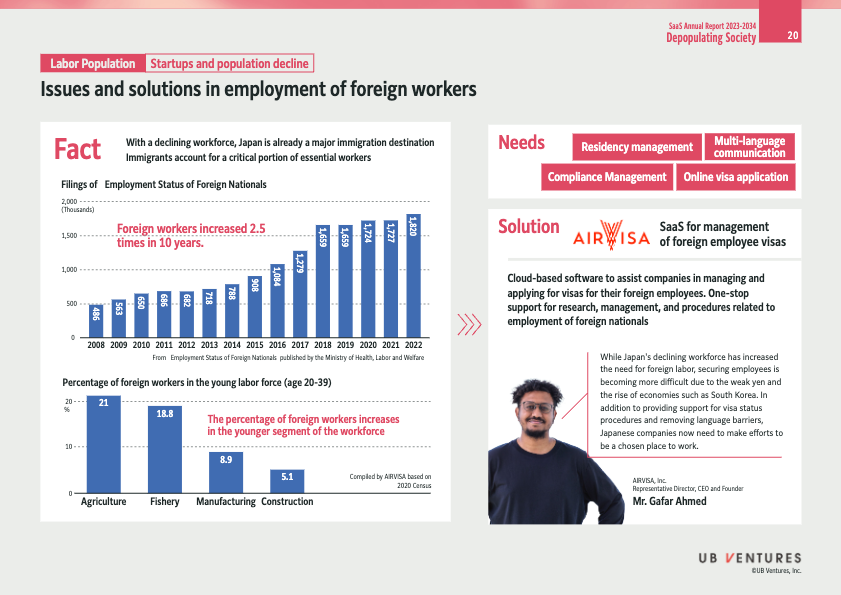
- Japan has a declining workforce and is becoming a significant immigration destination, with immigrants comprising a crucial part of the essential workforce.
- Foreign workers increased 2.5 times in the past decade.
Employment Filings Data (2008-2022)
| Year | Foreign Workers (Thousands) |
|---|---|
| 2008 | 486 |
| 2009 | 563 |
| 2010 | 650 |
| 2011 | 686 |
| 2012 | 682 |
| 2013 | 718 |
| 2014 | 788 |
| 2015 | 908 |
| 2016 | 1,084 |
| 2017 | 1,279 |
| 2018 | 1,659 |
| 2019 | 1,659 |
| 2020 | 1,724 |
| 2021 | 1,727 |
| 2022 | 1,820 |
Insight: The increase in foreign workers reflects a rising demand for labor in Japan, highlighting the country's struggles with a shrinking native workforce.
Percentage of Foreign Workers in Young Labor Force (Ages 20-39)
| Sector | Percentage of Foreign Workers (%) |
|---|---|
| Agriculture | 21 |
| Fishery | 18.8 |
| Manufacturing | 8.9 |
| Construction | 5.1 |
Insight: The data indicates that foreign workers are more prevalent in certain sectors, especially agriculture and fishery, which may signal areas where labor shortages are most acute.
Needs
- Residency Management: Efficiently managing the residency status of foreign workers.
- Multi-language Communication: Ensuring clear communication across language barriers.
- Compliance Management: Adhering to regulations governing the employment of foreign nationals.
- Online Visa Application: Streamlining the visa application process for foreign employees.
Insight: Addressing these needs is critical for companies striving to integrate foreign workers into their workforce effectively.
Solution: AIRVISA
- Description: Cloud-based software designed to assist companies in managing and applying for visas for foreign employees.
- Benefits: Offers one-stop support for research, management, and procedures related to the employment of foreign nationals.
Insight: Implementing advanced technologies like AIRVISA can help Japanese companies navigate the complexities of foreign labor laws and visa procedures effectively.
Contextual Challenges
- Despite the growing number of foreign workers, securing employees is becoming more challenging due to the weak yen and competition from countries like South Korea.
- Japanese companies need to improve their attractiveness as employers by offering support for visa processes and overcoming language barriers.
Insight: The interplay of economic factors and workforce dynamics necessitates innovative recruitment strategies to attract foreign talent.
Conclusion
Japan’s workforce challenges present both opportunities and challenges for foreign labor. By utilizing technology and addressing key needs, companies can successfully employ foreign workers and contribute to the economy's recovery amid demographic shifts.
Extended readings:
Good and Bad Mindsets for SaaS Expansion
Overview
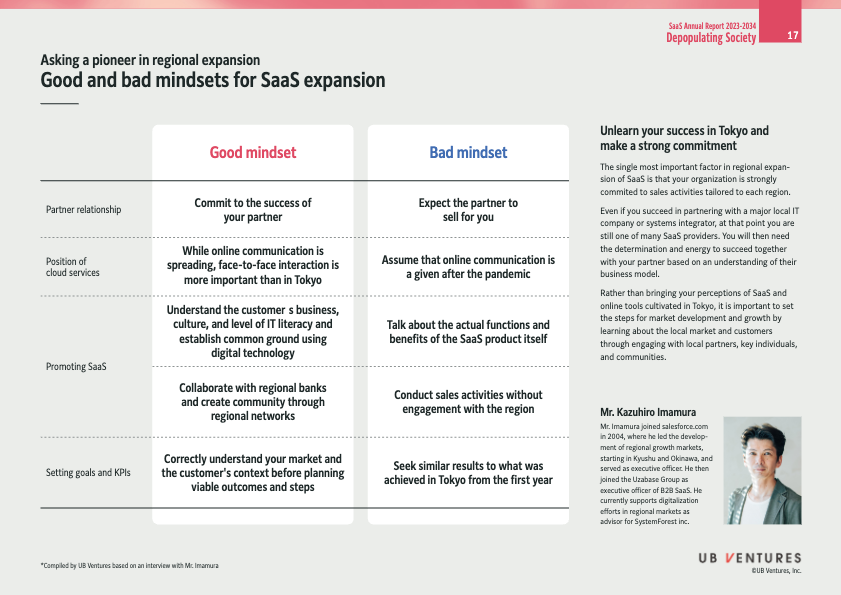
This document outlines the essential good and bad mindsets for Software as a Service (SaaS) expansion, particularly focusing on regional markets. Insights are derived from an interview with Mr. Kazuhiro Imamura, a pioneer in regional expansion.
Good Mindsets
| Aspect | Good Mindset | Insights |
|---|---|---|
| Partner Relationship | Commit to the success of your partner | Establishing a strong partnership is crucial for mutual growth. Prioritize their needs and success. |
| Position of Cloud Services | While online communication is spreading, face-to-face interaction is more important than in Tokyo | Personal interactions can build trust and deeper understanding of the partner's needs. |
| Promoting SaaS | Understand the customer’s business, culture, and level of IT literacy and establish common ground using digital technology | Tailor your approach based on the cultural context and technological capabilities of your clients. |
| Setting Goals and KPIs | Collaborate with regional banks and create community through regional networks | Leveraging local networks can enhance credibility and build a supportive ecosystem. |
| Correctly understand your market and the customer’s context before planning viable outcomes and steps | Researching market specifics ensures effective strategy and implementation. |
Bad Mindsets
| Aspect | Bad Mindset | Insights |
|---|---|---|
| Partner Relationship | Expect the partner to sell for you | This undermines the partner's role; success is a shared responsibility. |
| Position of Cloud Services | Assume that online communication is a given after the pandemic | Over-relying on digital communication can alienate partners who prefer direct engagement. |
| Promoting SaaS | Talk about the actual functions and benefits of the SaaS product itself | Focus should be on providing solutions to partners’ problems rather than on product features alone. |
| Setting Goals and KPIs | Conduct sales activities without engagement with the region | Lack of local engagement can lead to misunderstandings and ineffective strategies. |
| Seek similar results to what was achieved in Tokyo from the first year | Expecting identical outcomes across different regions is unrealistic and can set up for failure. |
Key Insights from Mr. Kazuhiro Imamura
- The principal factor in regional SaaS expansion is a strong commitment to tailored sales activities that match the local context.
- Even partnerships with established local IT companies require continuous effort and adaptability to thrive.
- Understanding local markets and engaging deeply with local communities is essential for successful expansion.
Background of Mr. Kazuhiro Imamura
- Joined Salesforce.com in 2004, leading regional market development, starting in Kyushu and Okinawa.
- Served as an executive officer before joining Uzabase Group to focus on B2B SaaS.
- Currently supports digitalization efforts in regional markets as an advisor for SystemForest, Inc.
Extended readings:
SaaS Annual Report 2023-2024
Innovation in a Depopulating Society
Key Points:
-
Title of Report: SaaS Annual Report 2023-2024
- This report focuses on the theme of innovation in the context of societal depopulation.
-
Main Theme: Innovation in a Depopulating Society
- Insight: Depopulation can lead to economic challenges, but it also opens avenues for innovation, particularly in technology and service delivery. Businesses may need to pivot their strategies to cater to a shrinking customer base.
Additional Information:
-
SaaS (Software as a Service) : A software distribution model in which applications are hosted in the cloud and accessed via the internet. This model allows for flexibility and scalability, which can be crucial in adapting to changing population dynamics.
-
Depopulation: Refers to the decline in population due to factors like lower birth rates, increased mortality rates, or migration. Understanding this trend is vital for businesses as they strategize for future growth or sustainability.
Contextual Note:
- The report suggests that while depopulation poses risks, it concurrently serves as a catalyst for innovative solutions in various sectors, including healthcare, education, and technology. Companies must be proactive in embracing these challenges as opportunities for growth.
Extended readings:
UB Ventures, Inc. Overview
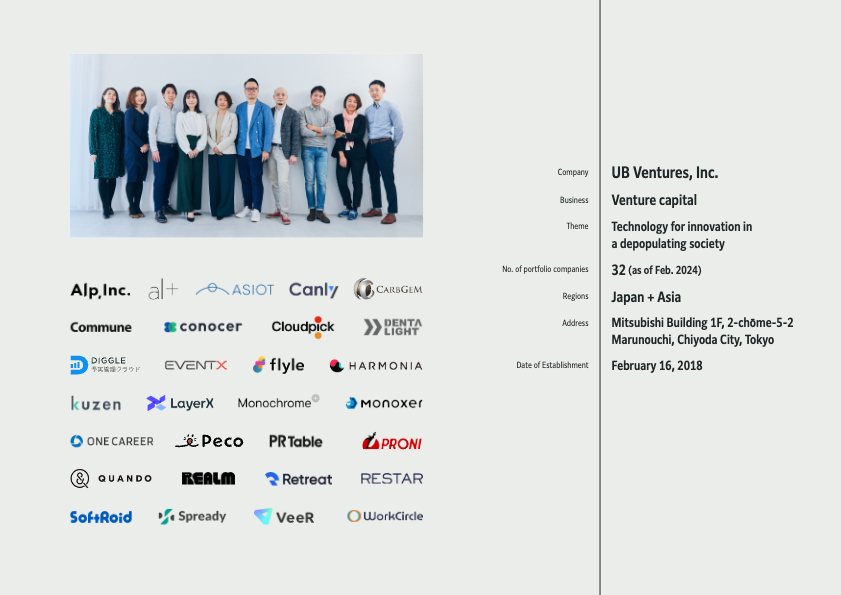
Company Information
- Name: UB Ventures, Inc.
- Business Sector: Venture Capital
- Theme: Focus on technology innovations addressing challenges in a depopulating society.
- Regions of Operation: Japan + Asia
- Date of Establishment: February 16, 2018
- Address: Mitsubishi Building 1F, 2-chome-5-2 Marunouchi, Chiyoda City, Tokyo
Portfolio Companies
As of February 2024, UB Ventures, Inc. has a total of 32 portfolio companies. These companies span various sectors reflecting the innovative focus of UB Ventures, particularly in response to societal trends.
Notable Portfolio Companies:
| Company Name |
|---|
| Alp, Inc. |
| alt |
| ASIOT |
| Canly |
| CarbGem |
| Commune |
| Conocer |
| Cloudpick |
| Denta Light |
| DIGGLE |
| EventX |
| Flyle |
| Harmonia |
| Kuzen |
| LayerX |
| Monochrome |
| Monoxer |
| ONE CAREER |
| Peco |
| PR Table |
| PRONI |
| Quando |
| Realm |
| Retreat |
| Restar |
| SoftRoid |
| SpreadY |
| Veer |
| WorkCircle |
Insights
- Focus on Depopulation: The theme of addressing depopulation indicates a strategic investment direction aimed at tackling demographic challenges, particularly relevant in countries like Japan.
- Diverse Portfolio: The range of companies shows a variety of innovative technologies, suggesting that UB Ventures is looking for disruptive startups that can create significant societal impact.
- Expansion Potential: With a focus on both Japan and Asia, there's potential for cross-border collaborations and investments, enhancing their reach and influence.
Conclusion
UB Ventures, Inc. positions itself as a forward-thinking venture capital firm, dedicated to harnessing technology to solve modern societal issues. The diverse portfolio illustrates a strategic commitment to innovation in critical areas.
Extended readings:
Notes on Japan's Social Infrastructure and Depopulation Issues
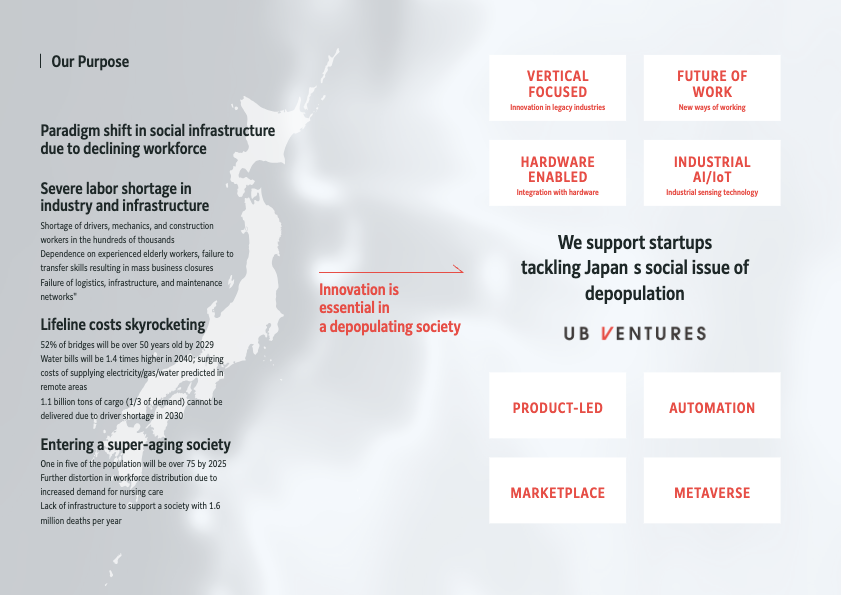
Paradigm Shift Due to Declining Workforce
- Japan is experiencing a significant transformation in its social infrastructure primarily due to a declining workforce.
- This shift necessitates innovative solutions to address emerging challenges.
Severe Labor Shortages
- Affected Industries:
- Drivers
- Mechanics
- Construction workers
- Impact:
- Shortages in thousands, leading to dependency on experienced elderly workers.
- Failure in transferring skills results in mass business closures.
- Breakdown of logistics, infrastructure, and maintenance networks.
Lifeline Costs Skyrocketing
- Bridges:
- 52% of bridges are projected to be over 50 years old by 2029.
- Water Costs:
- Water bills anticipated to be 1.4 times higher by 2040.
- Increasing costs of providing utilities (electricity, gas, water) in remote areas.
- Cargo Shortages:
- 1.1 billion tons of cargo (approximately one-third of total demand) cannot be delivered due to projected driver shortages by 2030.
Entering a Super-aging Society
- Demographics:
- One in five individuals will be over the age of 75 by 2025.
- Implications:
- Workforce distribution increasingly strained due to heightened demand for nursing care.
- Insufficient infrastructure to support a society with an expected 1.6 million deaths annually.
Innovation as a Solution
- Core Message:
- "Innovation is essential in a depopulating society."
- Focus Areas for Startups:
- Vertical Focused: Innovation within legacy industries to modernize practices.
- Future of Work: Development of new working models to adapt to changing demands.
- Hardware Enabled: Integration of advanced hardware solutions to improve efficiency.
- Industrial AI/IoT: Utilization of industrial sensing technology to enhance operational capabilities.
- Product-Led: Strategies centered around product innovation to tackle emerging needs.
- Automation: Enhancing processes through automation to mitigate labor shortages.
- Marketplace and Metaverse: Exploring digital solutions to connect supply and demand in innovative ways.
These notes underscore the critical situation Japan faces due to its declining workforce, highlighting both the challenges and the innovative avenues that can be pursued to mitigate the effects of depopulation.
Extended readings:
SaaS is Now a Mature Industry. Will It Serve as Infrastructure to Support a Depopulating Society?
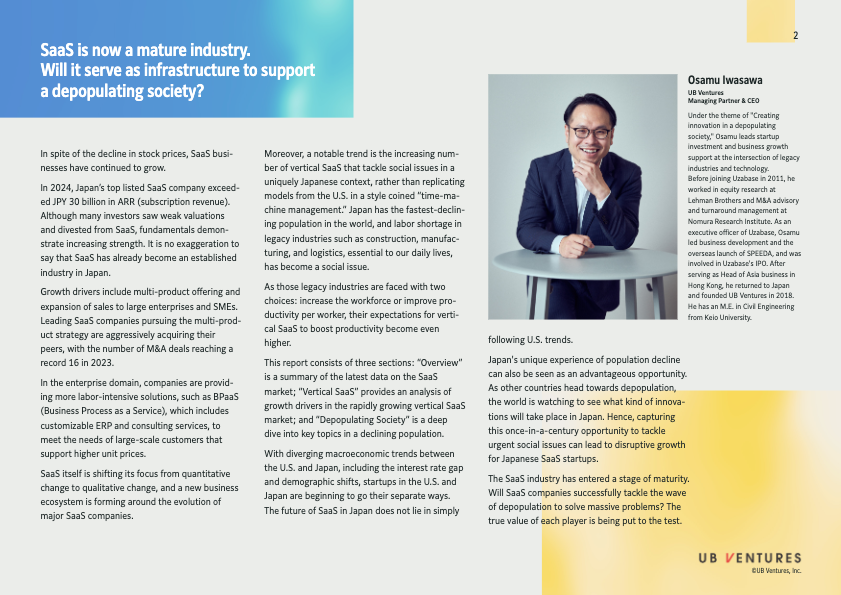
Overview of the SaaS Market in Japan
-
Growth Despite Stock Price Declines:
- In 2024, Japan's top SaaS company exceeded JPY 30 billion in Annual Recurring Revenue (ARR).
- Strong fundamentals indicate SaaS has become a significant industry in Japan despite investor concerns.
-
M&A Activity:
- The number of Mergers and Acquisitions (M&A) reached a record of 16 in 2023, reflecting a trend toward consolidation among leading SaaS companies.
-
Market Drivers for Growth:
- Multi-product offerings and expanding sales to large enterprises and SMEs (Small and Medium-sized Enterprises) drive growth.
- Traditional sectors adopting SaaS for efficiency.
Vertical SaaS and Social Issues
-
Emerging Trend of Vertical SaaS:
- There is an increasing number of SaaS solutions targeting social issues specific to Japan, diverging from U.S. models.
- This trend is described as "time-machine management," focusing on addressing Japan's unique challenges, such as labor shortages in legacy industries (construction, manufacturing, logistics).
-
Labor Shortages:
- Japan has the fastest-declining population globally, leading to a pronounced labor shortage.
- Legacy industries are compelled to either increase workforce numbers or enhance productivity per worker, raising expectations for vertical SaaS to deliver solutions.
Report Structure and Focus Areas
-
Sections of the Report:
- Overview: Latest data on the SaaS market in Japan.
- Vertical SaaS: Analysis of growth drivers within this rapidly growing sector.
- Depopulating Society: In-depth examination of challenges and opportunities presented by a declining population.
-
Macroeconomic Trends:
- Japan's economic conditions differ from those in the U.S., including interest rate disparities and demographic shifts, prompting a unique path for SaaS development.
Opportunities and Challenges
-
Japan as a Case Study:
- Japan's experience with depopulation presents an opportunity to develop innovative solutions that could be models for other countries facing similar challenges.
-
SaaS Industry Maturity:
- The SaaS sector is reaching a stage of maturity, prompting questions about its ability to address significant social issues arising from population decline.
-
Value of Each Player:
- The potential of SaaS companies will be tested as they tackle pressing societal problems and demonstrate their true value in the evolving landscape.
Key Insights from Osamu Iwasawa
-
Role of Leadership:
- Osamu Iwasawa emphasizes the creation of innovation to address the challenges of a depopulating society, drawing from experience in investment and technology.
-
SaaS Evolution:
- There is a shift from purely quantitative growth metrics to qualitative changes within the SaaS ecosystem, indicating a move toward sustainable and impactful solutions.
By focusing on these key themes and insights, stakeholders in the SaaS industry can better navigate the complexities of a mature market while actively addressing societal challenges.
Extended readings:
Top Vertical SaaS Startups in Japan by Valuation
Overview
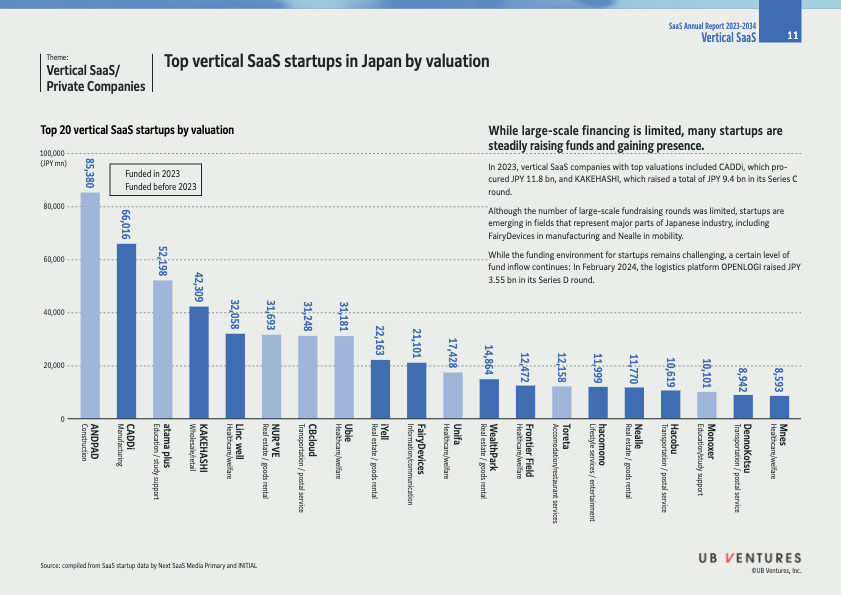
The chart presents the top 20 vertical Software as a Service (SaaS) startups in Japan based on their valuations. It highlights funding received in 2023 versus before 2023 and reveals trends in various sectors.
Key Insights
- Vertical SaaS: These are specialized SaaS solutions tailored for specific industries. The growth of vertical SaaS indicates how technology is being integrated into traditional sectors to improve efficiency and services.
- Funding Landscape: Despite challenges in large-scale financing, startups continue to attract investment, particularly in key industries like manufacturing and healthcare.
Top 20 Vertical SaaS Startups by Valuation
| Rank | Company | Valuation (JPY mn) | Sector | Funded Year |
|---|---|---|---|---|
| 1 | ANDPAD | 85,380 | Construction | 2023 |
| 2 | CADDi | 66,016 | Manufacturing | 2023 |
| 3 | atama plus | 52,198 | Education / Study Support | 2023 |
| 4 | KAKEHASHI | 42,309 | Wholesale/Retail | Before 2023 |
| 5 | Linc well | 32,058 | Healthcare/Welfare | 2023 |
| 6 | NUR*VE | 31,693 | Real Estate / Goods Rental | 2023 |
| 7 | CBcloud | 31,248 | Transportation / Postal Service | Before 2023 |
| 8 | Ubie | 31,181 | Healthcare/Welfare | Before 2023 |
| 9 | iYell | 22,163 | Real Estate / Goods Rental | Before 2023 |
| 10 | FairyDevices | 21,101 | Information/Communication | Before 2023 |
| 11 | Unifa | 17,428 | Healthcare/Welfare | Before 2023 |
| 12 | WealthPark | 14,864 | Real Estate / Goods Rental | Before 2023 |
| 13 | Frontier Field | 12,472 | Healthcare/Welfare | Before 2023 |
| 14 | Toreta | 12,158 | Accommodation/Restaurant Services | Before 2023 |
| 15 | hacomono | 11,999 | Lifestyle Services / Entertainment | Before 2023 |
| 16 | Nealle | 11,770 | Real Estate / Goods Rental | Before 2023 |
| 17 | Hacobu | 10,619 | Transportation / Postal Service | Before 2023 |
| 18 | Monoxer | 10,101 | Education / Study Support | Before 2023 |
| 19 | DennoKotsu | 8,942 | Transportation / Postal Service | Before 2023 |
| 20 | Mnes | 8,593 | Healthcare/Welfare | Before 2023 |
Additional Information
- In 2023, CADDi and KAKEHASHI led in valuations, with significant fund inflows marking their growth.
- Key sectors such as manufacturing (represented by FairyDevices) and mobility (represented by Nealle) are emerging as vital areas for innovation and investment.
- The funding climate remains challenging, but there are still positive signs of investment, as seen with OPENLOGI, which secured JPY 3.55 billion in February 2024 for its Series D round.
Understanding these trends can provide insights into the future of vertical SaaS in Japan and highlight opportunities for growth in various sectors.
Extended readings:
SaaS Annual Report 2023-2024
Overview
- The document pertains to the SaaS (Software as a Service) Annual Report for the fiscal year 2023-2024.
- SaaS is a cloud-based service where instead of downloading software on your desktop PC or business network to run and update, you instead access an application via your web browser.
Key Components
-
SaaS Model:
- Providers host applications and make them available to customers over the Internet.
- Common benefits include reduced costs, scalability, automatic updates, and accessibility from anywhere with an Internet connection.
-
UB Ventures:
- The report is published by UB Ventures, suggesting involvement in technology investment or consulting within the SaaS sector.
Insights and Ideas
-
Market Trends:
- Increasing migration of businesses to cloud-based solutions due to flexibility and cost-effectiveness.
- Enhanced focus on security and compliance standards as regulations evolve.
-
Investment Insights:
- Investors should be aware of key players and trends within the SaaS market, potentially leading to identifying promising investment opportunities.
-
Future Projections:
- The year might witness innovations in AI-driven SaaS applications that enhance user experience and operational efficiency.
Conclusion
- This report serves as an essential resource for stakeholders interested in the SaaS landscape, helping them understand market dynamics, investment opportunities, and technological advancements expected in 2023-2024.
Extended readings:
UB Ventures SaaS Annual Report 2023-2024
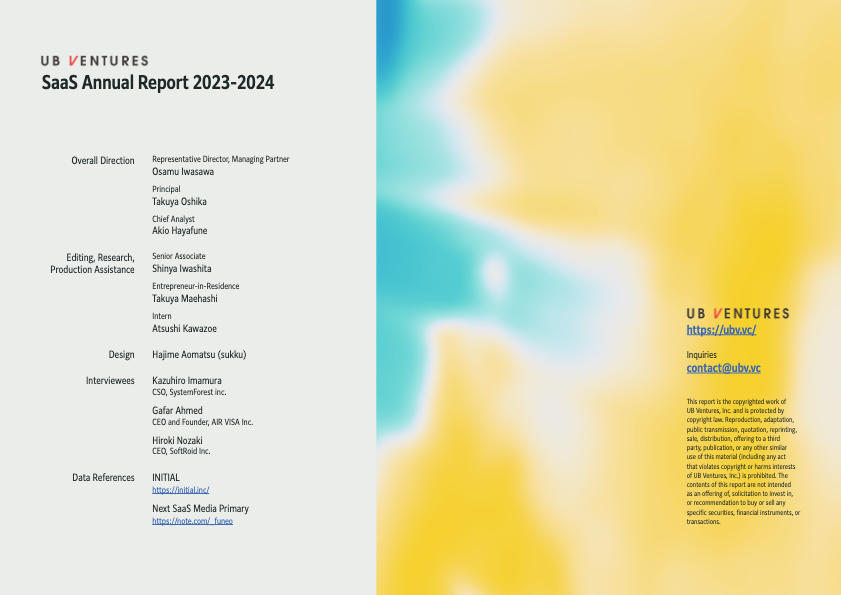
Overall Direction
- Representative Director, Managing Partner: Osamu Iwasawa
- The key figure responsible for guiding the strategic direction of UB Ventures.
- Principal: Takuya Oshika
- Oversees specific principal functions, likely focusing on investment strategies.
- Chief Analyst: Akio Hayafune
- Responsible for analyzing market trends and SaaS performance.
Editing, Research, Production Assistance
- Senior Associate: Shinya Iwashita
- Involved in high-level editing and research to ensure quality.
- Entrepreneur-in-Residence: Takuya Maehashi
- A role typically filled by an experienced entrepreneur who provides insights and guidance.
- Intern: Atsushi Kawazoe
- Supports with various tasks, gaining experience in the field.
Design
- Designer: Hajime Aomatsu (sukku)
- Responsible for the visual aspects of the report, ensuring it is professionally presented.
Interviewees
- Kazuhiro Imamura, CSO, SystemForest Inc.
- Provides insights regarding cybersecurity or system management within SaaS.
- Gafar Ahmed, CEO and Founder, AIR VISA Inc.
- Focuses on the intersection of travel technologies and payment solutions in SaaS.
- Hiroki Nozaki, CEO, SoftRoid Inc.
- Represents advancements in software solutions and automation.
Data References
- INITIAL: Initial
- Likely a data provider or analytics firm referenced in the report.
- Next SaaS Media Primary: Next SaaS Media
- A media platform that may offer insights and reports on the SaaS industry.
Inquiries
- Contact: contact@ubv.vc
- Website: UB Ventures
Copyright Information
- This report is the copyrighted work of UB Ventures, Inc. and is protected by copyright law. Unauthorized reproduction, adaptation, or distribution is prohibited. The contents of this report are not investment recommendations.
Insights
- The report appears to offer significant insights into the SaaS industry, with a focus on expert interviews, highlighting the importance of informed perspectives in strategic decision-making.
- The diverse roles suggest a comprehensive approach toward both analytical research and hands-on entrepreneurial experience, which are critical in navigating the fast-paced SaaS landscape.
Extended readings: